
PATH Groups: A Different Way to Experience Therapy and Connection

Some people are very good at carrying things.
They carry responsibility at work. They care for their families. They help friends through difficult seasons. They lead, solve problems, keep moving, and often appear steady from the outside.
But being the person others depend on can become lonely.
You may have people around you and still feel as though few people really know you. You may understand your patterns intellectually but find that they return when relationships become stressful. You may want more meaningful connection without knowing how to begin.
That is part of the thinking behind PATH Groups at Kind Therapy.
PATH Groups are small, therapist-led groups where people can better understand their emotional and relational patterns, experience genuine connection, and practice responding differently—with the support of others doing similar work.
Why group therapy?
Individual therapy offers something important: a private space centered on your particular history, needs, and goals.
Group therapy offers a different kind of experience.
In a group, you may recognize part of yourself in another person’s story. You may discover that something you have carried with embarrassment is more human and understandable than you imagined. You can also notice relationship patterns as they happen—not merely talk about them afterward.
A group can provide opportunities to:
- Put words to experiences you usually keep to yourself
- Learn how other people experience and respond to you
- Practice honesty, boundaries, and vulnerability
- Receive support without having to perform or provide
- Recognize patterns of withdrawing, pleasing, controlling, or overfunctioning
- Discover that you are not the only person carrying what you carry
This can be especially meaningful for people who are accustomed to managing life independently. As the Kind Therapy guide to men’s mental and emotional health explains, distress does not always look like visible sadness. It may show up through irritability, overwork, withdrawal, physical tension, numbness, or an increasing reliance on ways of escaping.
Some men prefer to begin one-on-one before joining a group; you can read about one-on-one therapy for men too.
A group provides a place to notice those patterns in the company of people who understand how difficult it can be to speak about them.
What does “PATH” mean?
PATH is the name for Kind Therapy’s small-group work: a place to understand the paths that brought us here and practice the paths we want to take next.
The goal is not to pressure anyone into sharing everything. It is to create enough consistency, safety, and honesty for meaningful work to happen over time.
PATH Groups draw from several parts of Kind Therapy’s approach:
- Attachment-based work that helps us understand how we seek connection and protect ourselves from hurt
- Emotionally focused work that identifies the cycles underneath anger, withdrawal, anxiety, and conflict
- Parts-informed work that approaches protective reactions with curiosity rather than shame
- Practical relational work that allows new responses to be practiced with real people
Insight matters. But many of our deepest patterns were formed in relationships, and relationships are often where new patterns must eventually be practiced.
Who might benefit from a PATH Group?
The first PATH cohort is being developed for adults who carry significant responsibility for other people—at home, at work, in ministry, or in their communities—but do not always have a place where they can be honest about their own experience.
It may be worth considering if you:
- Feel responsible for keeping things together
- Function well publicly but feel disconnected privately
- Find it difficult to identify or communicate what you need
- Avoid conflict until resentment or distance develops
- Feel pressure to remain competent, calm, useful, or strong
- Want deeper relationships but find vulnerability uncomfortable
- Understand your patterns but need somewhere to practice changing them
- Want support that is more relational than a class but more structured than an informal gathering
Some members may recognize patterns described in the Kind Therapy guides to people-pleasing, codependency, shame, or relationship disconnection.
Others may be navigating leadership pressure, anxiety, a life transition, questions about faith, or difficult experiences within a religious community. Faith can be welcomed when it is meaningful to a member, but PATH Groups are not Bible studies or church programs. Participation does not require a particular religious position. You can read more about that distinction in the guide to faith-informed counseling.
What would the group look like?
The initial PATH Group is planned as a closed, 12-week experience.
- Six to eight members
- One 75-minute meeting each week
- The same members throughout the 12 weeks
- A combination of guided conversation, practical learning, and group process
- Clear expectations concerning attendance, privacy, and respectful participation
A closed group allows trust to develop gradually. Members are not expected to disclose everything, and no one is required to speak before they are ready. At the same time, consistent attendance and a willingness to participate are important parts of building a useful group.
Every prospective member will connect with Robert before joining. That conversation is an opportunity to ask questions, discuss what you hope to gain, and decide together whether the group appears appropriate.
Not everyone who expresses interest will necessarily be placed in the same cohort. That is not a judgment about anyone’s readiness for therapy; thoughtful screening helps protect the experience of everyone involved.
PATH Group options
Two participation options are being considered:
PATH Group
Twelve weekly group meetings, paid in three monthly installments of $200.
Is a PATH Group confidential?
Confidentiality is taken seriously.
Members will agree not to disclose another participant’s identity or personal information outside the group. Expectations concerning communication between meetings, social media, and encounters in the community will also be discussed before the group begins.
It is important to be honest, however: a therapist can require and reinforce confidentiality, but cannot absolutely guarantee the actions of every group member. Prospective members will have an opportunity to consider this limitation before deciding whether to participate.
Is this a class or support group?
PATH Groups are therapist-led group therapy rather than an informal gathering, networking group, or educational class.
There may be brief teaching and practical exercises, but the experience centers on the emotional and relational work happening among the members. It is not an open-microphone confession session, and advice-giving is not the primary purpose.
The goal is a thoughtful, structured environment where people can become more aware of themselves and more capable of meaningful connection with others.
How do I express interest?
Expressing interest does not commit you to joining, and it does not affect any current or future individual therapy relationship.
If you would like to hear about the first PATH Group, use the Kind Therapy contact form and include “PATH Groups” in your message. You will receive information about the proposed schedule, location or online format, and the individual fit conversation.
There is no charge to express interest or ask questions. Payment begins only after the group details are finalized, the fit conversation is completed, and you choose to enroll.
Express interest in a PATH Group
You can also explore the complete library of Kind Therapy Guides for plain-language information about emotional, relational, and mental health concerns.
Written by Robert Russell, AMFT
Robert Russell is a pre-licensed Marriage and Family Therapist at Kind Therapy in Murfreesboro, Tennessee, practicing under the supervision of Dr. Sara Hopkins, LMFT (TN license #928). Kind Therapy provides in-person services in Murfreesboro and online therapy for clients located throughout Tennessee.
This article provides general educational information and is not a diagnosis, treatment recommendation, or substitute for individualized care. If you are in immediate danger or experiencing thoughts of suicide or self-harm, call or text 988 or call 911.
Written by Robert Russell, AMFT
Robert Russell, AMFT is the founder of Kind Therapy in Murfreesboro, Tennessee, and practices under the supervision of Dr. Sara Hopkins, LMFT (TN license #928). He works with couples navigating disconnection and with individuals carrying anxiety, trauma, grief, and the quieter forms of depression.
Keep reading
Related articles

How to Repair Your Relationship With Your Child After Yelling
You yelled. You lost your patience. You said something more harshly than you intended. Maybe you saw your child’s face change immediately and thought, I shouldn’t have said that. Or maybe it wasn’t…
Read article
The Power of Group Therapy: Healing Through Connection
Discover how group therapy reduces isolation and builds lasting connection. Kind Therapy guides clients through shared struggles with Emotionally Focused.
Read article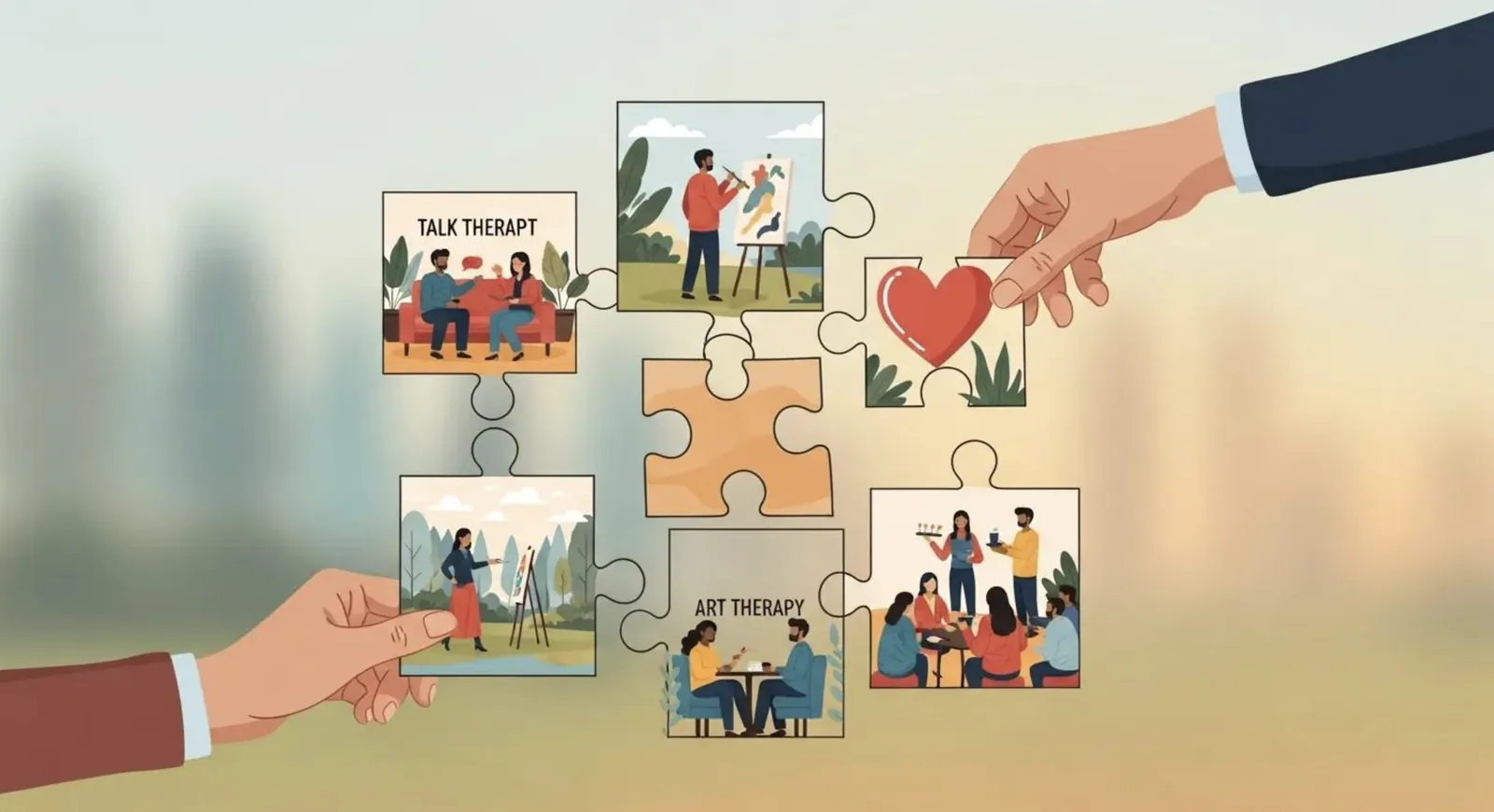
Couples Therapy vs Individual Therapy: Which to Choose?
Couples or Individual Therapy: Find Your Fit Deciding between individual and couples therapy starts with a clear look at what each approach aims to change. Individual therapy centers on one person’s mental health, coping skills, life history, and behavior patterns. Couples therapy focuses on how partners relate to one another communication, conflict cycles, and shared … Read more
Read articleKind Therapy Guides provide general educational information about emotional, relational, and mental health topics. They are not intended to provide a diagnosis, establish a therapist-client relationship, or replace individualized evaluation or treatment from a qualified healthcare or mental health professional.
If you are in immediate danger or experiencing thoughts of suicide or self-harm, seek immediate assistance. In the United States, call or text 988 to reach the Suicide & Crisis Lifeline or call 911 in an emergency.