
How to Repair Your Relationship With Your Child After Yelling

You yelled.
You lost your patience.
You said something more harshly than you intended.
Maybe you saw your child’s face change immediately and thought, I shouldn’t have said that.
Or maybe it wasn’t until later—after everyone had gone to their rooms and the house was quiet—that the guilt showed up.
For many parents navigating parenting after losing your temper, moments like these lead to a familiar fear:
Did I just damage my relationship with my child?
There’s an important idea from attachment-based parenting and attachment-based therapy that parents need to hear:
Healthy relationships aren’t relationships where disconnection never happens.
They’re relationships where repair is possible after disconnection.
Psychologist Dr. Becky Kennedy has helped popularize this idea in her TED Talk, The Single Most Important Parenting Strategy. Her message centers on something remarkably simple but powerful: we’re going to get things wrong with our children. What matters tremendously is what we do next.
As a Marriage and Family Therapist, I think this idea reaches even further.
Because learning how to repair a relationship may be one of the most important relational skills we ever develop.
What Is Rupture and Repair Parenting?
A rupture is a moment when connection between two people is disrupted.
It doesn’t necessarily have to be dramatic.
You snap at your child.
Your teenager tries to tell you something and you dismiss it.
You respond defensively to your spouse.
Your child is upset and you tell them they’re being ridiculous.
You misunderstand someone’s intentions.
You become overwhelmed and emotionally shut down.
Sometimes rupture is loud.
Sometimes it’s simply the moment someone we love realizes:
You aren’t understanding me right now.
These moments are part of human relationships.
The problem isn’t necessarily that rupture occurred.
The bigger question is:
What happens afterward?
That’s where repair begins.
Your Child Doesn’t Need a Perfect Parent

Parents can put enormous pressure on themselves to get everything right.
We read parenting books.
We listen to podcasts.
We learn about attachment.
We worry about trauma.
And eventually we can become terrified that every mistake is somehow permanently damaging our children.
That’s not a particularly realistic standard for parenting.
You’re going to become frustrated.
You’re going to misunderstand your child.
You’re occasionally going to respond from your own stress rather than from the calm, emotionally regulated place you wish you could access all the time.
If the flare-ups have become a pattern rather than an occasional slip, working with a men’s therapist can give fathers a place to look at what sits underneath the anger.
Your child doesn’t need you to pretend those moments never happened.
They need to learn something much more useful:
People who love each other can get things wrong—and then come back and make things right.
That’s a lesson your child may carry into friendships, dating relationships, marriage, and eventually their own parenting.
Why “I’m Sorry” Isn’t Always Enough

An apology can be an important part of repair.
But repair is often more than saying:
“Sorry I yelled.”
Especially when the apology is followed immediately by:
“…but you weren’t listening.”
We’ve all done some version of this.
“I’m sorry I lost my temper, but you need to understand how frustrating you were being.”
That’s technically an apology.
But emotionally, the message can become:
I behaved badly because of you.
Genuine repair requires us to take responsibility for our side of the interaction without making the other person responsible for our behavior.
That might sound more like:
“I was really frustrated earlier, and I yelled at you. I don’t like how I handled that. You weren’t responsible for me yelling. I should have handled my frustration differently.”
Notice what isn’t happening.
You’re not saying the child’s behavior was acceptable.
You’re not abandoning the boundary.
You’re not telling them they were right.
You’re taking responsibility for your behavior.
Those are two separate things.
Repair Doesn’t Mean Removing the Boundary

This distinction matters.
Parents sometimes worry that apologizing undermines their authority.
If my child was disrespectful, why should I apologize?
Because two things can be true at the same time.
Your child’s behavior may have been inappropriate.
And your response may also have been inappropriate.
You can repair your behavior without surrendering the boundary.
For example:
“It wasn’t okay for you to speak to your mother that way. That boundary hasn’t changed. But it also wasn’t okay for me to scream at you. I’m responsible for how I responded, and I’m sorry.”
That’s not weak parenting.
That’s modeling accountability.
You’re showing your child something they’ll eventually need to know how to do themselves:
I can take responsibility for what I did without pretending what you did was okay.
Imagine how different some marriages would look if both adults had learned that skill growing up.
What Repair Teaches Children About Relationships
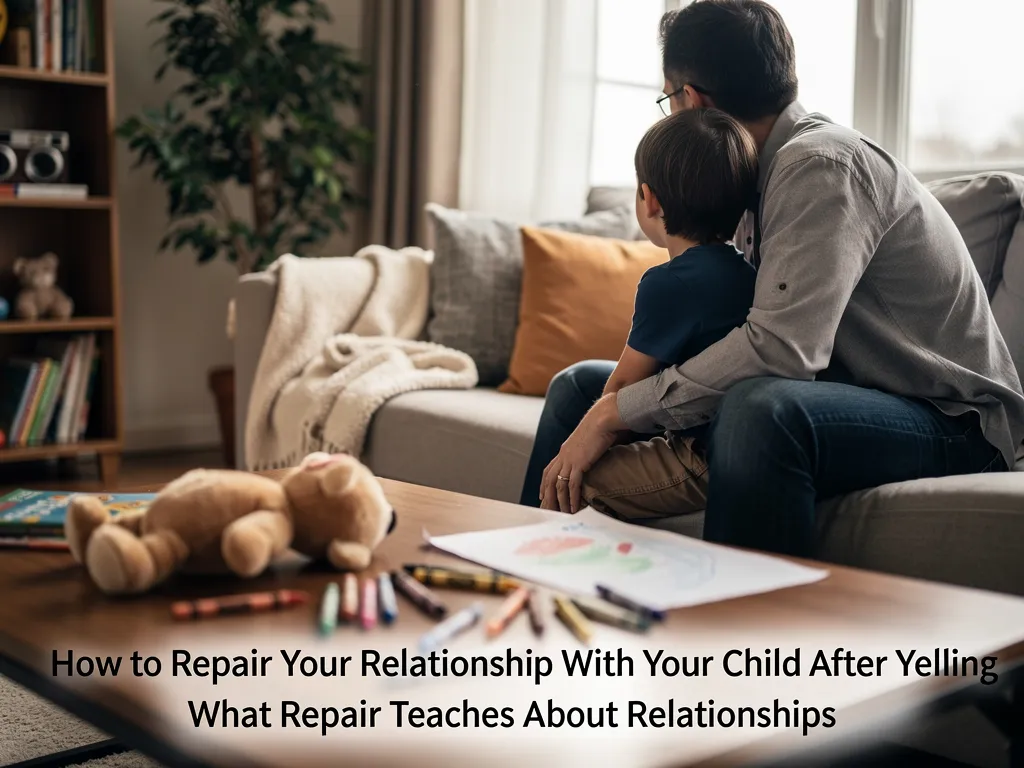
Children aren’t only listening to what we tell them about relationships.
They’re experiencing relationships through us.
When a parent makes a mistake and never acknowledges it, a child may be left alone to interpret what happened.
Was Dad angry because I’m bad?
Was Mom’s reaction my fault?
Are we okay?
Can we talk about what happened?
Repair gives the parent an opportunity to help make sense of the experience.
It communicates:
I remember what happened.
I recognize that it affected you.
I’m responsible for my behavior.
We’re still connected.
That’s an incredibly important relational experience.
The goal isn’t to erase every painful moment.
We can’t.
The goal is to demonstrate that difficult moments don’t necessarily have to become permanent disconnection.
How to Repair Your Relationship With Your Child After Yelling (And How to Apologize to Your Child)

There isn’t one perfect script.
In fact, if you’re concentrating too hard on saying the “correct” therapeutic words, your child will probably notice.
Repair should sound like you.
But there are several elements that can help.
1. Regulate Yourself First
Repair is difficult when you’re still furious.
Give yourself enough time to settle so that you can return to the conversation without immediately restarting the argument.
That doesn’t necessarily mean waiting until tomorrow.
It simply means making sure you’re capable of being curious rather than defensive.
2. Go Back to the Moment
Don’t pretend nothing happened.
You might simply say:
“Hey, I’ve been thinking about what happened earlier.”
That sentence alone communicates something important.
The relationship matters enough for me to come back.
3. Own What Was Yours
Be specific.
Instead of:
“Sorry about earlier.”
Try:
“I was frustrated, and I raised my voice and said some things in a way I don’t feel good about.”
4. Don’t Blame Your Child for Your Reaction
This is often the hardest part.
Avoid turning the apology into a prosecution.
You can address their behavior separately.
First, own yours.
5. Become Curious About Their Experience
You might ask:
“What was that like for you?”
And then try to listen.
You don’t have to agree with every interpretation your child has.
You’re simply creating room for their experience to exist alongside yours.
6. Reconnect
Sometimes this involves words.
Sometimes it’s a hug.
Sometimes it’s sitting beside your teenager when they’re ready to talk.
Sometimes repair doesn’t happen immediately because the other person isn’t ready.
That’s okay.
You can make yourself available without demanding that they instantly make you feel forgiven.
What If My Child Won’t Accept My Apology?
This can be uncomfortable.
We often apologize because we want the relationship to feel better.
So when our child responds with:
“Whatever.”
or:
“Leave me alone.”
we may become defensive again.
I apologized! What else do you want from me?
But an apology isn’t a transaction.
We don’t apologize so the other person will immediately remove our discomfort.
Sometimes the person we’ve hurt needs time.
Part of repair is allowing them to have that time.
Your responsibility is to make an honest attempt to own your behavior and remain emotionally available.
Their responsibility isn’t to make you feel better about it.
Repair Isn’t Just for Parents and Children

One of the reasons I love this concept is that it applies far beyond parenting.
Couples experience rupture constantly.
One person becomes defensive.
The other withdraws.
Someone says something hurtful.
Someone feels ignored.
One spouse reaches for connection and the other doesn’t recognize the attempt.
Suddenly two people who love each other are standing on opposite sides of an emotional wall.
The same question applies:
Can we find our way back?
Healthy marriages aren’t necessarily marriages without conflict.
They’re relationships where two people increasingly learn how to recognize disconnection, take responsibility for their contribution, understand each other’s experience, and move toward one another again.
That’s repair.
What If Repair Wasn’t Modeled in Your Family?
For some adults, this entire concept feels foreign.
Maybe your parents never apologized.
Conflict happened and then everyone simply pretended it didn’t.
Maybe anger meant hours or days of silence.
Maybe acknowledging mistakes was interpreted as weakness.
Maybe you learned that whoever had the most authority never had to apologize.
Then you became a parent.
And now you’re trying to give your children relational skills that nobody taught you.
That’s hard.
But it also means something important:
You don’t have to repeat a relational pattern simply because you inherited it.
Sometimes therapy involves recognizing the patterns we grew up with, understanding why they developed, and deciding which ones we want to carry forward.
Family and Relationship Therapy in Middle Tennessee
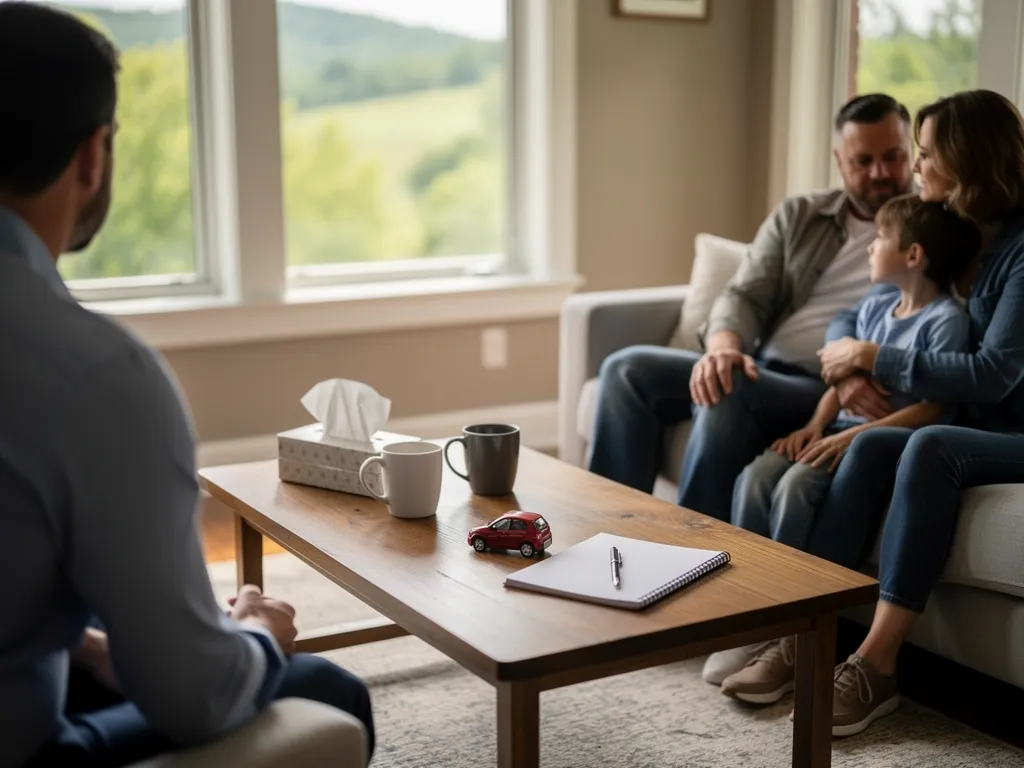
At Kind Therapy, I work with individuals and couples who want to better understand the patterns shaping their relationships.
That includes parents who recognize that their own childhood experiences are showing up in the way they respond to their children.
It includes couples who love each other but repeatedly find themselves caught in the same conflicts.
And it includes men who were taught how to work hard, solve problems, and take responsibility—but were never given much language for understanding what happens emotionally inside relationships.
My approach is informed by Emotionally Focused Therapy, attachment theory, and parts-based work. Rather than simply asking, “How do we stop fighting?”, therapy can help us become curious about what is happening underneath the conflict and what each person is reaching for.
Robert Russell, MMFT, at Kind Therapy, a Marriage and Family Therapist based in Murfreesboro, provides therapy for individuals and couples in Middle Tennessee and online across Tennessee.
You Will Get It Wrong
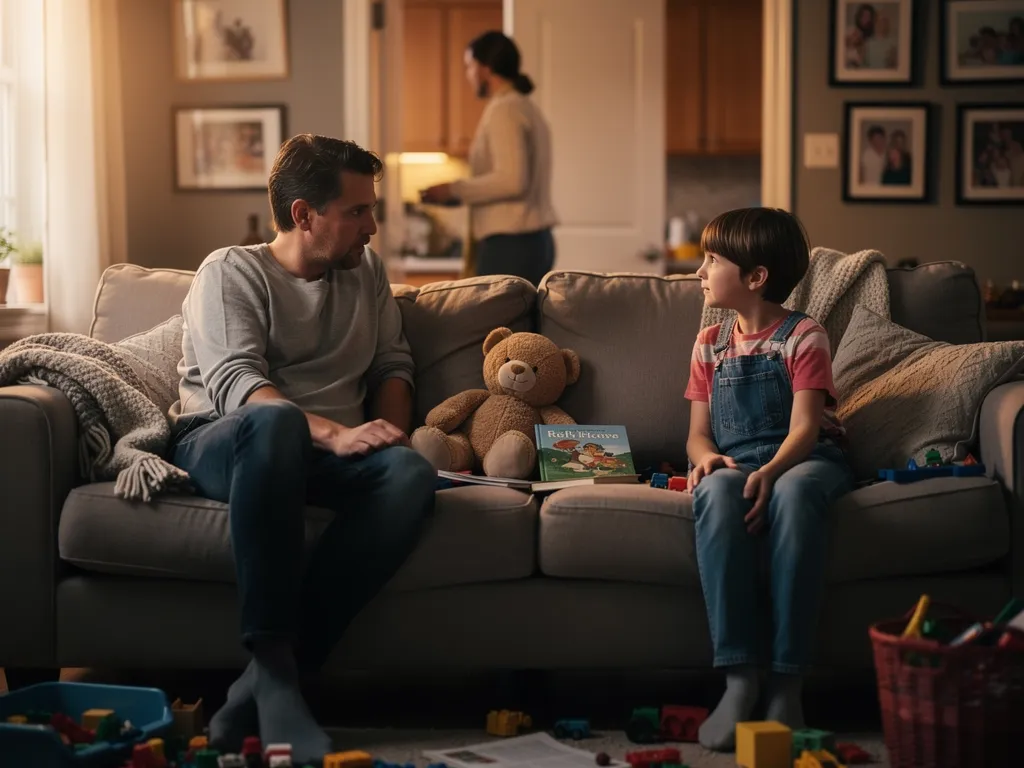
You will misunderstand your child.
You will lose your patience.
You will occasionally respond in ways you wish you hadn’t.
Your spouse will too.
The people closest to us inevitably experience some of our least polished moments.
The goal isn’t to create relationships where nobody ever gets hurt.
The goal is to become people who know what to do after we’ve hurt each other.
To notice.
To take responsibility.
To listen.
To return.
To repair.
Your children don’t need a perfect parent.
They need to experience something far more realistic:
A relationship can have a difficult moment without the difficult moment becoming the whole relationship.
Sometimes one of the most powerful things we can say to someone we love is simply:
“I didn’t handle that well. Can we try again?”
If you’re considering therapy and wondering whether Kind Therapy may be a good fit, you can book a consultation to start the conversation.
Written by Robert Russell, AMFT
Robert Russell, AMFT is the founder of Kind Therapy in Murfreesboro, Tennessee, and practices under the supervision of Dr. Sara Hopkins, LMFT (TN license #928). He works with couples navigating disconnection and with individuals carrying anxiety, trauma, grief, and the quieter forms of depression.
Keep reading
Related articles

PATH Groups: A Different Way to Experience Therapy and Connection
PATH Groups are small, therapist-led groups where people can better understand their emotional and relational patterns, experience genuine connection, and practice responding differently.
Read article
The Power of Group Therapy: Healing Through Connection
Discover how group therapy reduces isolation and builds lasting connection. Kind Therapy guides clients through shared struggles with Emotionally Focused.
Read article
Couples Therapy vs Individual Therapy: Which to Choose?
Couples or Individual Therapy: Find Your Fit Deciding between individual and couples therapy starts with a clear look at what each approach aims to change. Individual therapy centers on one person’s mental health, coping skills, life history, and behavior patterns. Couples therapy focuses on how partners relate to one another communication, conflict cycles, and shared … Read more
Read articleKind Therapy Guides provide general educational information about emotional, relational, and mental health topics. They are not intended to provide a diagnosis, establish a therapist-client relationship, or replace individualized evaluation or treatment from a qualified healthcare or mental health professional.
If you are in immediate danger or experiencing thoughts of suicide or self-harm, seek immediate assistance. In the United States, call or text 988 to reach the Suicide & Crisis Lifeline or call 911 in an emergency.