“Who Started It?” Is Usually the Wrong Question: Understanding the Cycle That Keeps Couples Stuck
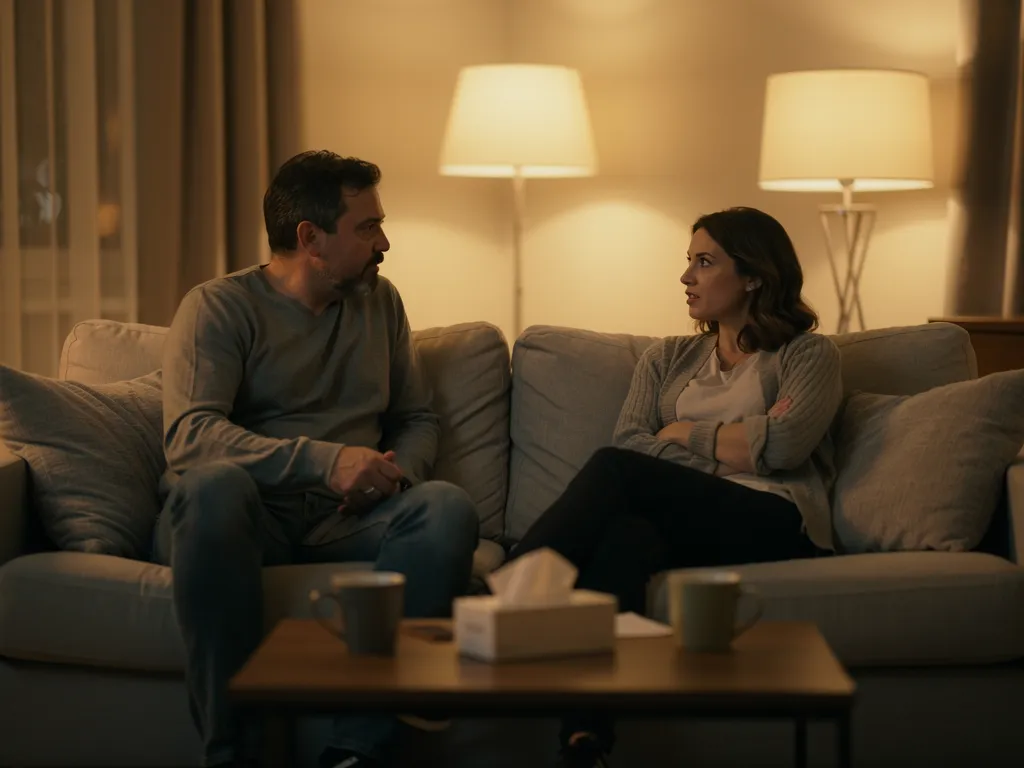
It usually sounds something like this:
“I wouldn’t get angry if she would stop criticizing me.”
And her response?
“I wouldn’t criticize him if he would actually talk to me.”
He says:
“I’d talk to you if every conversation didn’t turn into an argument.”
She says:
“Every conversation turns into an argument because you shut down the second I bring something up.”
So who’s causing the problem?
Him?
Her?
Here’s the frustrating answer:
Yes.
Not because both people are equally wrong. Not because every behavior in a relationship carries equal responsibility. And certainly not because harmful or abusive behavior should be explained away as a “relationship problem.”
But in many ordinary relationship conflicts, we’re asking the wrong question.
Instead of asking:
“Who started this?”
It may be much more helpful to ask:
“What keeps happening between us?”
That small shift is at the heart of something marriage and family therapists call circular causality.
The term sounds complicated.
The idea isn’t.
What Is Circular Causality?
Most of us naturally think about problems in a straight line.
A causes B.
You hurt my feelings, so I became angry.
You criticized me, so I shut down.
You stopped being affectionate, so I stopped pursuing you.
You spent too much money, so I became controlling about the budget.
There may be truth in each of those statements.
The problem is that relationships don’t usually operate in straight lines.
They’re more like loops.
What I do affects you. How you respond affects me. My response to your response affects you again.
And around we go.
That’s circular causality.
Here’s a simple example.
A wife feels disconnected from her husband, so she asks:
“What’s wrong with you? Why don’t you ever talk to me anymore?”
He hears criticism.
He becomes defensive and withdraws.
His withdrawal makes her feel even more alone.
So she pursues harder:
“See! This is exactly what I’m talking about. You don’t care.”
Now he feels even more criticized and misunderstood.
So he withdraws further.
She becomes more upset.
He becomes quieter.
She becomes louder.
And eventually both people walk away thinking:
“If my spouse would just stop doing THAT, we’d be fine.”
And they’re both looking at different parts of the same circle.
When one partner is usually the one who goes quiet, doing some of that work individually can help as well, which is often where therapy for men begins.
The Problem With “You Made Me Do It”
Understanding a relationship cycle does not mean that your spouse controls your behavior.
That’s an important distinction.
Circular causality isn’t:
“I yelled because you made me angry.”
You’re still responsible for yelling.
It isn’t:
“I lied because you would have gotten upset if I told you the truth.”
You’re still responsible for lying.
And it certainly isn’t a framework for excusing abuse, coercion, threats, violence, or other harmful behavior.
Each person remains responsible for their choices.
But responsibility and influence aren’t the same thing.
Your spouse doesn’t control your response.
Your spouse absolutely can influence what happens inside you.
And you influence what happens inside them.
That’s part of being emotionally connected to another human being.
The goal isn’t to assign equal blame.
The goal is to understand the pattern well enough that somebody can begin doing something different.
Most Couples Become Experts on Their Spouse’s Half of the Cycle
This is one of my favorite things to notice in couples work.
People often know their partner’s behavior incredibly well.
They can give you dates.
Times.
Examples.
Historical documentation.
Maybe even screenshots.
Ask someone what their spouse does during conflict and you might get a 20-minute presentation.
“She criticizes everything.”
“He shuts down.”
“She won’t let anything go.”
“He gets defensive.”
“She has to be right.”
“He doesn’t care.”
But ask:
“What do you do next?”
and suddenly things get more interesting.
Because we tend to experience our own behavior as a reasonable reaction to the other person’s unreasonable behavior.
Of course I pursued him.
He was withdrawing.
Of course I withdrew.
She was attacking me.
Of course I became controlling.
He was being irresponsible.
Of course I stopped telling her things.
She overreacts.
From inside the cycle, our behavior makes perfect sense.
And that’s exactly why the cycle is so difficult to see.
The Dance You Didn’t Know You Were Doing

I sometimes think of relationship patterns like a dance.
Imagine two people who’ve been dancing together for years.
One steps forward.
The other steps backward.
The first moves closer.
The second moves farther away.
Eventually they’ve done it so many times that neither person is consciously deciding what step comes next.
They just know the dance.
Relationships can work the same way.
One person pursues.
The other withdraws.
This pursue-withdraw pattern is one of the most common cycles couples get stuck in.
One criticizes.
The other becomes defensive.
One becomes anxious.
The other becomes emotionally distant.
One tries to control.
The other becomes secretive.
And after enough repetitions, each person’s behavior begins predicting the other’s.
You aren’t waking up in the morning and deciding:
I think I’ll participate in our dysfunctional relationship cycle today.
You’re reacting.
And your partner is reacting to your reaction.
Which causes you to react to their reaction.
That’s the circle.
“But They Really Are the Problem”
This is usually where someone wants to object.
Okay, Robert, I understand the concept.
But you haven’t met my husband.
Or:
You don’t understand my wife.
Fair enough.
Sometimes one partner genuinely is engaging in behavior that needs to change.
Circular causality doesn’t require pretending every conflict is 50/50.
Relationships aren’t mathematical equations where responsibility always divides neatly down the middle.
The question isn’t:
“How can I prove that we’re equally responsible?”
The better question is:
“What part of this cycle belongs to me?”
Because that’s the part you can actually change.
You may only own 20% of what’s happening.
Okay.
What are you doing with your 20%?
That’s far more useful than spending all your energy trying to force your spouse to take responsibility for their 80%.
And something interesting can happen when one person changes their step in the dance:
The dance itself has to change.
What’s Underneath the Behavior?
This is where couples therapy can become much more interesting than learning better communication techniques.
Because underneath many relationship cycles are two people trying to protect something vulnerable.
The angry spouse may actually feel:
“I don’t matter to you.”
The critical spouse may be trying to say:
“Please notice me.”
The withdrawing spouse may be thinking:
“Nothing I do is ever good enough.”
The defensive spouse may hear:
“You’re a disappointment.”
The controlling spouse may actually feel terrified:
“I don’t know if I can depend on you.”
The spouse who appears indifferent may be overwhelmed and have no idea how to make things better.
On the surface, we see anger, criticism, defensiveness, silence, nagging, withdrawal, or control.
Underneath, we often find something softer:
Fear.
Loneliness.
Shame.
Rejection.
Inadequacy.
Longing.
Do I matter to you?
Are you there for me?
Am I enough for you?
Can I trust you?
Do you still want me?
Those conversations look very different from:
“YOU NEVER LISTEN TO ME!”
Try Mapping Your Own Relationship Cycle
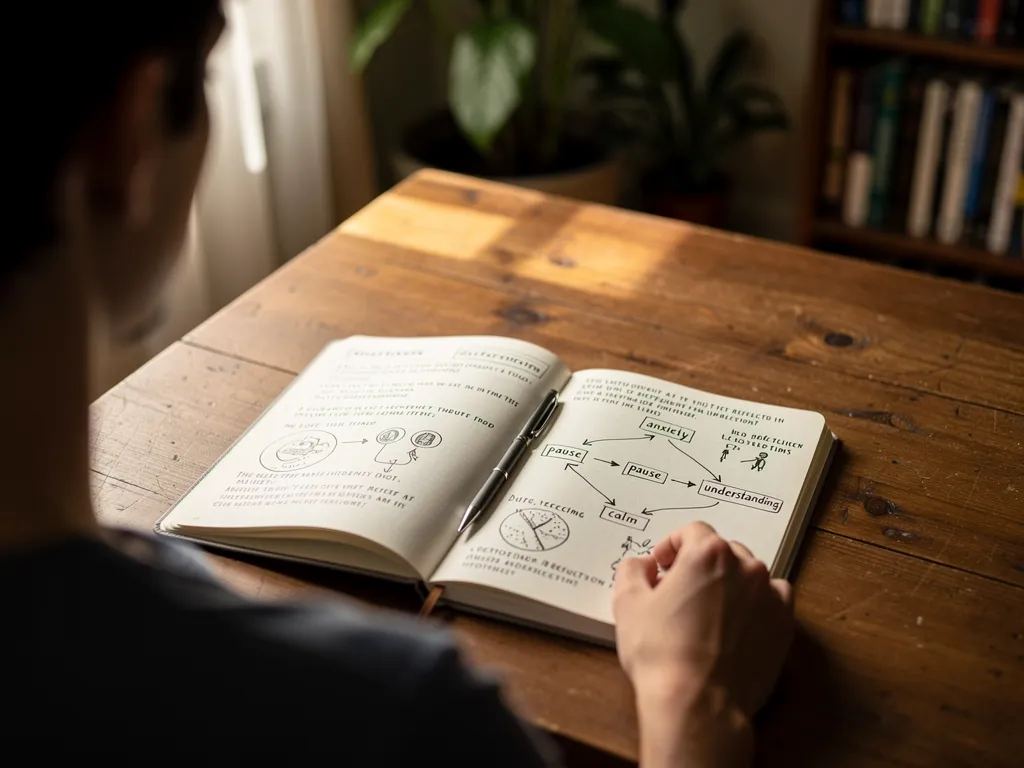
The next time you and your spouse get caught in a familiar argument, don’t immediately try to solve it.
Instead, become curious about the sequence.
Ask yourself:
What happened first that I noticed?
Then:
What did I feel?
What did I do?
How did my spouse respond?
What did their response make me feel?
What did I do next?
Now ask your spouse the same questions.
You might discover something like:
I feel ignored → I criticize → you feel inadequate → you withdraw → I feel abandoned → I criticize harder → you withdraw further.
Now we have something to work with.
The enemy is no longer:
My husband.
Or:
My wife.
The enemy becomes:
This cycle we keep getting pulled into.
That’s a significant change.
Because if your spouse is the problem, your relationship can’t improve until you fix your spouse.
But if the cycle is the problem, you can begin working on it together.
Change Your Step and Watch What Happens
You don’t have to wait for your spouse to become a completely different person before changing your part of the cycle.
Suppose your normal pattern is:
She criticizes → you become defensive.
What happens if you notice the defensiveness arriving and become curious instead?
“I can feel myself wanting to defend myself right now, but I think there’s something you’re trying to tell me. Are you feeling like I haven’t been there for you?”
That’s a different step.
Or:
He withdraws → you pursue harder.
What if instead you say:
“When you get quiet, I start getting scared that you’re leaving the conversation—and then I come after you harder. I’m trying not to do that. Can you tell me what’s happening for you right now?”
Different step.
Will your spouse immediately respond perfectly?
Probably not.
You’ve been practicing the old dance together for a long time.
But someone has to introduce a new step.
From “Me vs. You” to “Us vs. the Cycle”

This may be one of the most important shifts couples can make.
When conflict becomes:
Me vs. you
somebody has to win.
And if I need to prove that you’re the problem, I’m probably going to spend the conversation collecting evidence against you rather than trying to understand you.
But couples can gradually learn to say:
“Oh. We’re doing that thing again.”
That’s different.
Now we’re standing beside each other looking at the cycle instead of standing across from each other preparing for battle.
It doesn’t mean the issue disappears.
Money still needs to be discussed.
Sex still matters.
Parenting disagreements still need resolution.
Trust may still need to be rebuilt.
Boundaries may still need to be established.
But we’re addressing those problems from a very different position.
We’re no longer spending all of our energy determining who started it.
We’re asking:
How do we stop repeating it?
Couples Therapy in Murfreesboro and Middle Tennessee
At Kind Therapy, I work with couples who often arrive believing they have a communication problem.
And sometimes they do.
But frequently, they already know how to communicate.
What they don’t yet recognize is the emotional cycle that takes over when the relationship feels threatened.
As a Murfreesboro marriage counselor, my work with couples is informed by Marriage and Family Therapy, Emotionally Focused Therapy, attachment theory, and parts-based approaches—an attachment-based couples therapy approach that looks beneath the surface behavior. Rather than simply deciding which partner is right, we’re interested in understanding what keeps happening between you. The goal isn’t to help you stop blaming your spouse by pretending nothing happened—it’s to help you both see the cycle clearly enough to step out of it.
What triggers the cycle?
What happens inside each person?
How does each partner protect themselves?
And what are both people actually longing for underneath the conflict?
Robert Russell, MMFT, at Kind Therapy provides couples therapy and marriage counseling in Murfreesboro and online throughout Tennessee.
The goal isn’t to determine which spouse is the problem.
It’s helping couples recognize the cycle they’ve become trapped in—and learn a different dance.
Maybe You’re Both Asking the Wrong Question

The next time you find yourself thinking:
“We wouldn’t have this problem if my spouse would just…”
stop for a moment.
You may be completely right about something your spouse needs to change.
But try asking another question too:
“What happens next?”
What do they do?
What happens inside you?
What do you do?
What happens inside them?
And how does the whole thing eventually circle back around?
You might discover that you’ve spent years arguing about who started something that no longer has a clear beginning.
That’s the nature of a cycle.
And sometimes the most important moment in couples therapy isn’t figuring out who started the dance.
It’s realizing you’re both dancing.
If this cycle feels familiar, Kind Therapy’s Couples Communication Guide explores why couples can get caught in patterns of criticism, defensiveness, pursuit, and withdrawal—and how understanding what happens underneath those reactions can begin to change the conversation.
If you’re considering therapy and wondering whether Kind Therapy may be a good fit, you can book a consultation to start the conversation.
Written by Robert Russell, AMFT
Robert Russell, AMFT is the founder of Kind Therapy in Murfreesboro, Tennessee, and practices under the supervision of Dr. Sara Hopkins, LMFT (TN license #928). He works with couples navigating disconnection and with individuals carrying anxiety, trauma, grief, and the quieter forms of depression.
Keep reading
Related articles

Kind Therapy Guides provide general educational information about emotional, relational, and mental health topics. They are not intended to provide a diagnosis, establish a therapist-client relationship, or replace individualized evaluation or treatment from a qualified healthcare or mental health professional.
If you are in immediate danger or experiencing thoughts of suicide or self-harm, seek immediate assistance. In the United States, call or text 988 to reach the Suicide & Crisis Lifeline or call 911 in an emergency.